


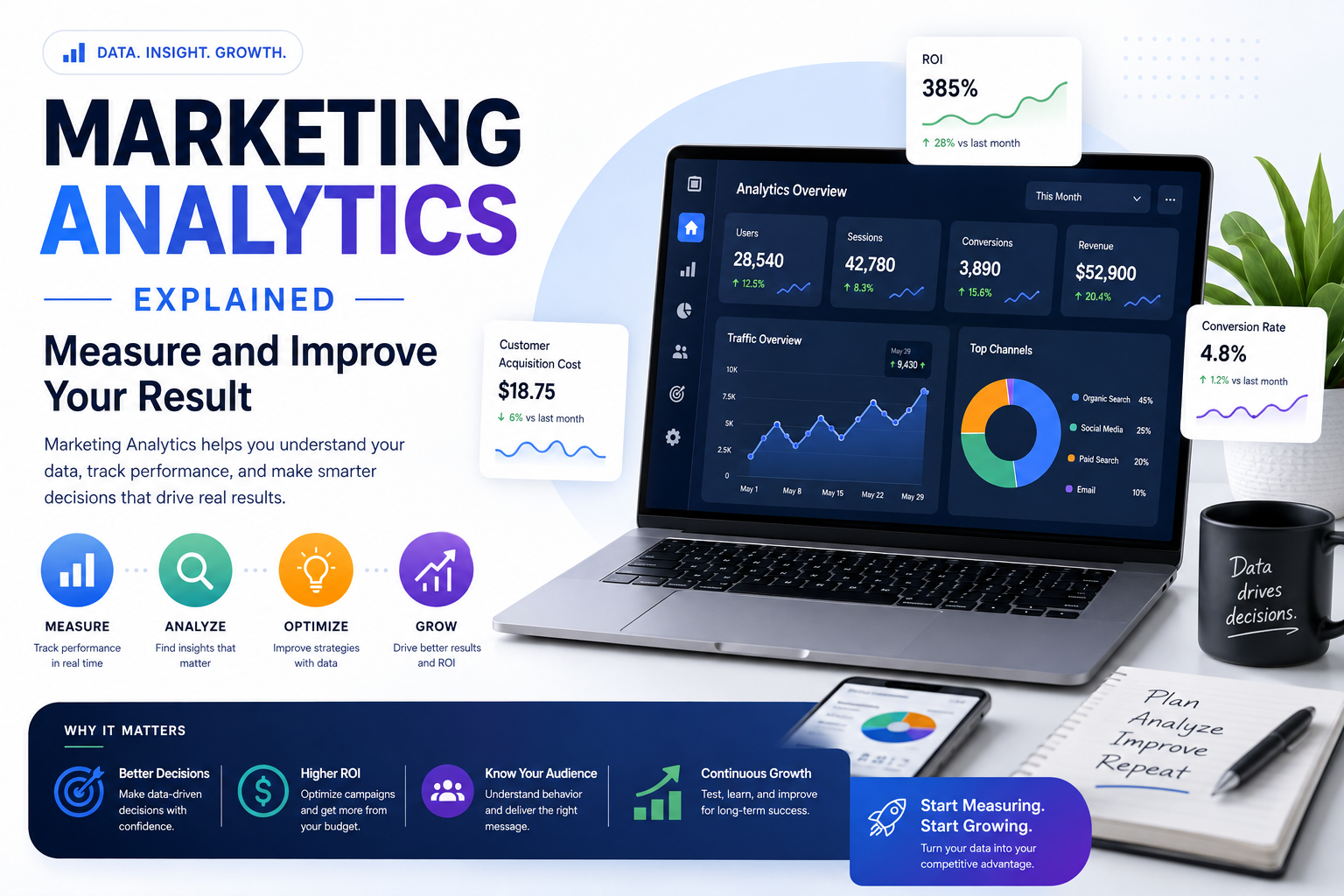
What Is Marketing Analytics?
Marketing Analytics is the process of collecting, measuring, and analyzing marketing data to understand how well your campaigns perform. It helps businesses identify what is working, what is not, and where improvements can be made. Instead of relying on guesswork, marketing analytics provides data-driven insights that support smarter marketing decisions.
Whether you run email campaigns, social media ads, SEO strategies, or paid advertising, marketing analytics allows you to track performance and optimize your efforts for better results.
Why Marketing Analytics Matters
Using Marketing Analytics offers several important benefits:
- Measures the success of marketing campaigns.
- Identifies the channels that generate the highest return.
- Improves customer understanding and behavior analysis.
- Helps reduce unnecessary marketing expenses.
- Supports better business decisions with accurate data.
- Increases return on investment (ROI).
Businesses that regularly analyze their marketing data are better positioned to improve performance and stay ahead of competitors.
Key Marketing Analytics Metrics
To make informed decisions, marketers should monitor the following metrics:
Website Traffic
Track how many people visit your website and where they come from, such as search engines, social media, or paid advertisements.
Conversion Rate
Measure the percentage of visitors who complete a desired action, such as making a purchase or filling out a contact form.
Customer Acquisition Cost (CAC)
Calculate how much it costs to acquire a new customer through your marketing efforts.
Return on Investment (ROI)
Determine whether your marketing campaigns generate more revenue than they cost.
Click-Through Rate (CTR)
Evaluate how often users click on your advertisements, emails, or search results after seeing them.
Customer Lifetime Value (CLV)
Estimate the total revenue a customer is expected to generate throughout their relationship with your business.
Popular Marketing Analytics Tools
Several tools make it easier to collect and analyze marketing data, including:
- Google Analytics
- Google Search Console
- HubSpot
- Semrush
- Ahrefs
- Meta Business Suite
- Microsoft Clarity
Each tool provides valuable insights into different aspects of marketing performance.
How to Improve Results with Marketing Analytics
Follow these simple steps to improve your marketing performance:
Set Clear Goals
Define measurable objectives such as increasing website traffic, generating more leads, or improving sales.
Track the Right Metrics
Focus on key performance indicators (KPIs) that align with your business goals instead of tracking every available metric.
Analyze Customer Behavior
Study how users interact with your website and marketing campaigns to identify opportunities for improvement.
Test Different Strategies
Run A/B tests on landing pages, advertisements, email campaigns, and calls to action to determine what performs best.
Optimize Campaigns Regularly
Review your analytics reports frequently and adjust your campaigns based on the insights you gather.
Common Marketing Analytics Mistakes
Avoid these common mistakes when using Marketing Analytics:
- Tracking too many metrics without clear objectives.
- Ignoring customer behavior data.
- Failing to measure ROI.
- Making decisions based on assumptions instead of data.
- Not reviewing analytics reports consistently.
Best Practices for Marketing Analytics
To get the most value from your analytics:
- Set SMART marketing goals.
- Monitor KPIs regularly.
- Use multiple data sources for better insights.
- Create easy-to-read dashboards.
- Continuously test and improve campaigns.
- Share reports with your marketing team.
Conclusion
Marketing Analytics is essential for businesses that want to improve marketing performance and achieve better results. By tracking the right metrics, understanding customer behavior, and making data-driven decisions, you can optimize your campaigns, increase ROI, and grow your business more effectively. Consistent analysis and ongoing optimization are the keys to long-term marketing success.